

How to Hire for Your Real Estate Team Without Hiring Out of Desperation
Short answer: To hire a real estate assistant the right way, first make sure you're actually ready to hire. Define the role, budget for the full cost of an employee, and run a structured, multi-stage interview process that includes a personality assessment, references and more than one conversation. Then set the new hire up with clear 30-60-90 day goals. The biggest mistake teams make is hiring out of desperation because they need somebody now.
The Biggest Mistake: Hiring Out of Desperation
The biggest gap I see right now, the downfall for so many agents and teams, is hiring out of desperation.
It happens with agents you're recruiting to produce, and it happens with operations team members behind the scenes. You're feeling the pressure, you need somebody, and you hire the first person who seems okay.
And then that person takes time, energy and money. If they aren't the right fit, you start over, again and again. Your business never gets off the runway because someone is always starting at zero.
Hire from readiness, not relief. That creates stronger teams.
Step 1: Make Sure You're Actually Ready to Hire
Before you post a job, be honest with yourself. Here's what we walk agents through in our Hiring Readiness Checklist:
Business stability. Is your income consistent month over month? Could you comfortably cover payroll for 6–9 months, even in a slower season, without relying on future closings?
Systems already built. Are your transaction, listing and admin processes documented somewhere other than your head, so someone could step in and follow them without constant clarification?
Time and willingness to manage. Do you have time every week to train, coach and check in? Are you willing to be the leader, not just the rainmaker?
Clear role expectations. Do you know what comes off your plate and what you still own, and how success in the role will be measured?
Long-term vision. Are you planning to keep this hire long term, with raises and room for the role to grow?
If you checked most of those, you may be ready. If you left a few unchecked, that doesn't mean "never." It means leaning on experienced third-party support first may be the smarter next step while your systems, volume and clarity solidify. Our post on hiring in-house vs. outsourcing has the free checklist.
Step 2: Decide What Role You're Really Hiring For
Get clear on the problem you're solving:
Do you need hours back? That's an assistant or executive assistant: calendar, inbox, showings, marketing tasks.
Do you need someone to run the business behind you? That's a director of operations: systems, team, P&L.
Do you need contract-to-close handled? That may be a transaction coordinator, in-house or outsourced.
And don't expect one person to do everything perfectly. Write down what this person will own and what success looks like.
Step 3: Budget for the Real Cost (and Hire for Experience)
The salary is just the starting point. In our own cost analysis, a $45,000 salary turns into roughly $60,000–$75,000 a year once you add benefits, payroll taxes, and office and equipment costs. That's before you count your time spent onboarding, training and managing.
And be realistic about who you can get for the budget. A strong multi-function admin often costs $65,000–$70,000+. If you're hoping a brand-new hire will just "figure it out," that's a setup for frustration on both sides. Hire for experience, not just affordability.
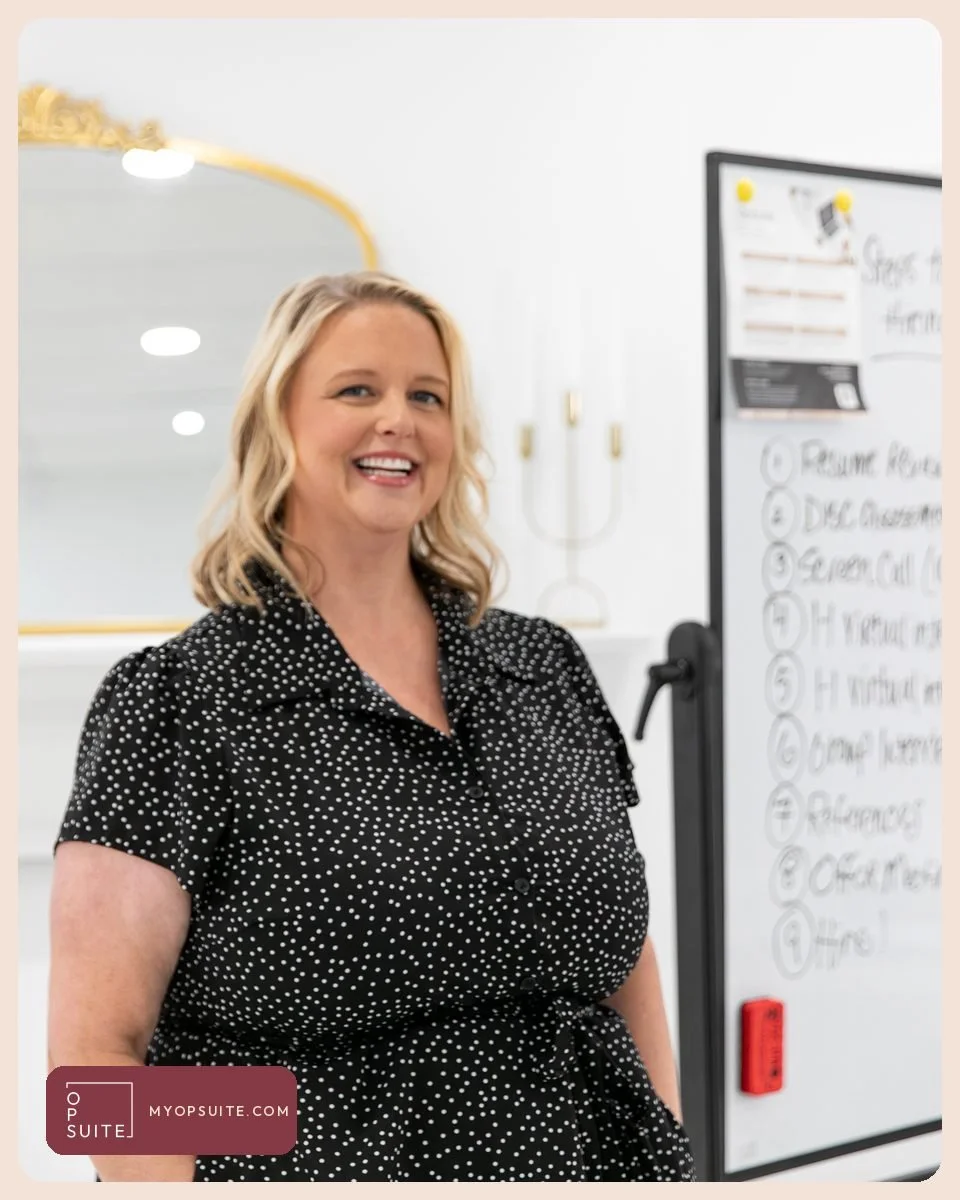
Step 4: Run a Real, Multi-Stage Interview Process
To recruit at a high level, you can't meet someone once and say, "Okay, you're hired." When we recruit for a client, we start by getting a deep understanding of the business culture and the role. Then we write the job description and market it to source candidates. From there, qualified candidates go through our hiring process:
Initial phone interview (15 minutes)
Personality assessment
Background and reference check
Personality verification interview
Life story and motivational interview
In-person or virtual team meeting with you
Offer and expectations
And I don't skip steps. Ever.
Every interview is recorded and shared with the business owner. You can follow along with your favorite candidates on your own schedule and stay in the loop without giving up hours of your week to interviews, and without the disconnect that can come with a typical third-party staffing company. Your main involvement is reviewing the top candidates and joining the final interviews.
Step 5: Hire for Fit Now, Later, and for Them
To find the right candidate, the person needs to be:
The right fit for you right now
The right fit for where your business is going
The right fit for them
That third one gets skipped all the time. If the role isn't right for the candidate, it won't last, no matter how good they look on paper.
Step 6: Give It the Time It Takes
Good hiring takes longer than desperate hiring. Our recruiting placements are typically completed within 8–12 weeks, depending on the role, the market and how quickly feedback comes back during interviews. The focus is finding the right fit, not the fastest fit.
The best teams also build a bench. They keep great people in mind even when there isn't an opening yet, so the next hire doesn't start from scratch.
Step 7: Set Them Up for Success with 30-60-90 Day Goals
Hiring is the start, not the finish. It's crucial to set standards and accountability right away. A clear 30-60-90 day plan shows you quickly whether you made the wrong hire, or the right one.
For clients who want support after the hire, we offer Employee Coaching and Accountability: an initial leadership guidance call, a 30-60-90 day plan with milestones, and a weekly 30-minute coaching call with your new employee. The goal is a new hire who fully owns their position by the end of 90 days.
Let Someone Else Do the Heavy Lifting
Most agents are phenomenal salespeople, not recruiters. That's okay. We're not just recruiters. We're operators, with years of in-the-trenches experience hiring and training operations team members for high-level teams. You spend your time on the strongest candidates instead of every applicant.
That's exactly what our Recruiting & Training service is for.
Practical Takeaways
Hire from readiness, not relief. Run the readiness check first.
Define the role. Assistant, DOO and TC are different jobs.
Budget for the full cost and for real experience.
Use a multi-stage process with an assessment, references, recorded interviews and a team meeting.
Hire for fit now, later, and for them.
Expect 8–12 weeks, and keep a bench.
Plan the first 90 days with goals and accountability.
FAQ
How do I hire a real estate assistant?
Start by making sure you're ready: stable income, documented systems and time to lead. Define what the role owns and budget for the full cost. Then run a structured process (phone screen, personality assessment, references, multiple interviews and a team meeting) before the offer, and set 30-60-90 day goals.
How long does it take to hire a real estate assistant?
With a thorough process, plan on about 8–12 weeks, depending on the role, the market and how quickly you give feedback. Rushing usually means hiring out of desperation, and that costs more in the long run.
How much does it really cost to hire an in-house admin?
More than the salary. In our cost analysis, a $45,000 salary becomes roughly $60,000–$75,000 a year with benefits, payroll taxes, and office and equipment costs. A strong, experienced multi-function admin often costs $65,000–$70,000+.
Should I hire in-house or outsource?
If you're ready to lead, train and manage consistently, in-house can be a great move. If not yet, leveraging experienced third-party support first lets your systems and volume solidify. Our in-house vs. outsource guide walks through it.
Growing your team in Jacksonville or Northeast Florida? Let us do the heavy lifting. Learn more about Recruiting & Training and our other services, or reach out to us here to talk through your next hire.
